Female athletes worldwide compete at the highest levels, break records and prove themselves every day, and yet the unfortunate truth is that sexism is still very prevalent. Female athletes are often treated differently and held to separate standards from their male counterparts. It is not always obvious or overt–it can appear as jokes, unequal attention or disproportionate financial support, yet it is still very real.
A recent public example of this occurred with the U.S. men’s and women’s Olympic hockey teams. After both teams won the gold medal, when President Donald Trump called the men’s team to congratulate them and invite them to the White House, he joked that he was “going to have to bring the women’s team” too, or else he would be “impeached.” This comment wasn’t just a harmless joke; moments like these reflect a wider attitude that women’s sports are seen as less important or less worthy of respect, even at the highest levels of competition.
As a female wrestler, I participate in a sport that has historically been very male-dominated, and I have firsthand experience with these issues. I have seen coaches, both on my own team and other teams, hold unequal expectations between male and female athletes. Additionally, male wrestlers on my team have made comments suggesting that girls do not wrestle as well and have treated us differently, such as going easy on us during practice, reinforcing these unequal standards. Although the sport has made significant progress towards equality, and I am very proud of how much female wrestling has grown, there is still work to be done.
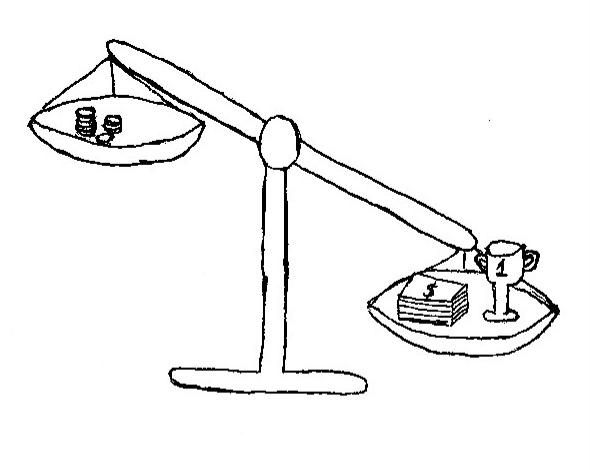
This lack of respect also shows up in professional sports, especially when it comes to pay. A common example of this is the pay gap between the WNBA and the NBA. Although the WNBA makes a lot less money overall, a much smaller percentage of league revenue goes toward paying WNBA players compared to the NBA, only 9% compared to the NBA’s 48%. When female athletes are compensated less, it suggests that their work is worth less.
Sexism in sports today does not always appear as blatant exclusion. More often, it comes in the form of unequal pay, limited opportunities or differing expectations. These issues are easier to ignore than outright discrimination, but they are just as harmful. Female athletes deserve equal recognition, and sexism in sports will continue to exist until attitudes, pay and expectations are truly equal.