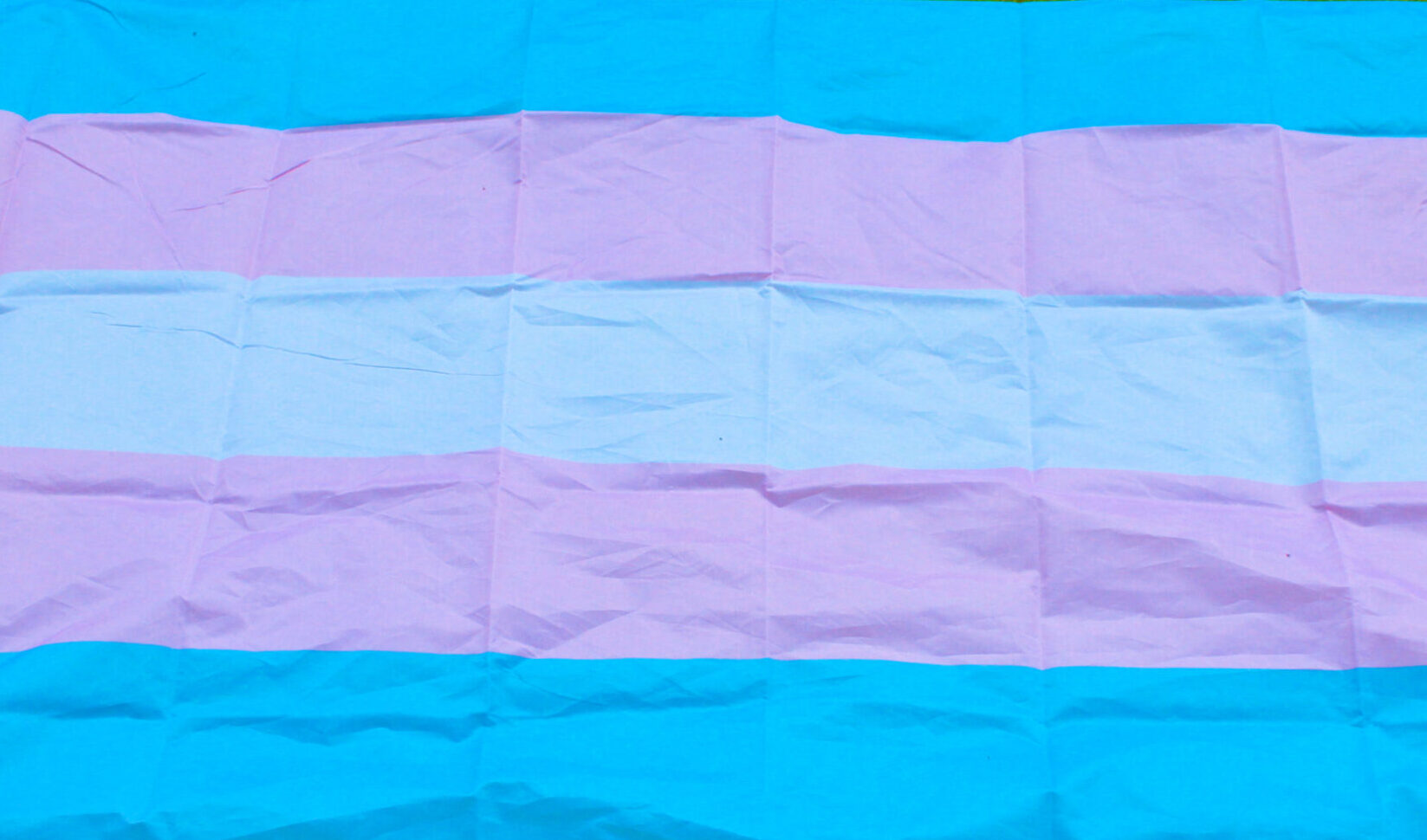
“Life, liberty, and the pursuit of happiness” are the unalienable rights listed in the Declaration of Independence, highlighting the American value of freedom from government tyranny and the opportunity to act freely and seek success and personal fulfillment. For transgender Americans, such foundational rights are threatened by anti-transgender policies, legislation and disinformation, which violate their right to pursue happiness through the means of self-expression.
Celia Sandhya Daniels, the Founder and CEO of Rebekon Consulting, has journeyed from a closeted transgender child in Southern India to a successful entrepreneur in healthcare management consulting in Thousand Oaks. Daniels works with the Diversity Collective of Ventura County, Stonewall Democrats and PFLAG, advocating for transgender freedoms.
“Trans people are all over the globe, and there is a reason why a person is trans. It’s a medical condition. It’s called gender incongruence. But science doesn’t matter to the politicians, because they’re using politics to create fear among people,” Daniels said. Detailing the rarity of successful, openly transgender people in India, as well as the struggles of managing the corporate world after coming out as a transgender woman in California, Daniels expands on the importance of advocating for marginalized, persecuted communities.
“The US is one of the most hateful countries right now when it comes to the trans laws,” Daniels said. “I couldn’t just sit quietly with so many laws and so many legislators and bills and hatred against me. So I started thinking, what can I do to change? And I started my company and started educating all these companies about being inclusive in healthcare.”
Generally, about 1% of the global population identifies as transgender, and less than 1% of the U.S. population, which is about 1.3 million Americans. According to the Public Policy Institute of California, California is home to the largest LGBTQ+ population in America.
The Trans Legislation Tracker has reported 39 anti-trans bills passed in 2026 so far, 32 of which have already been signed into law, primarily targeting transgender Americans’ healthcare, education and athletic involvement. As of May 2026, 773 bills are in motion across 43 different states. The bills outline specific legal reprimand for various “crimes” of transgender Americans. Oklahoma currently has the most bills under consideration right now with 57.
Sebastian Hall, NPHS senior, board member of the NPHS Gender and Sexuality Alliance and LGBTQ+ community member, has voiced his own concerns about the threats to the safety of transgender people in the United States.
“I think it’s incredibly frightening the state that our country is currently in, and the amount of danger that people in my community are currently in. I think that a lot of people need to step up and fight for those that they love and their own rights, because staying quiet in a time like this just isn’t gonna serve anybody well,” Hall said.
The impacts of laws and legislations concerning transgender rights and freedoms that have been passed or are being discussed will impact nearly everyone, even if those impacts might not seem obvious.
“Using the transgender people in sports debate, invasive practices like gender inspections can not only traumatize transgender people who are just trying to participate in sports, but they can also traumatize cisgender people who are accused of being trans just based on not conforming to societal expectations of their gender,” Hall said.
Beyond the restriction of gender-affirming care or presentation of transgender media in public spaces, many states have also passed a public declaration of transgenderism as a mental disorder. West Virginia, for example, states that, “Transgenderism, understood as a conflict between one’s biological sex and gender identity, is a condition that requires careful psychological evaluation and appropriate mental health care, not blind affirmation.” Published in February of 2025, this House Resolution details the Biblical scripture contradiction of transgenderism and states the need for psychological intervention for transgender individuals.
The current presidential administration claims transgenderism is a threat to the safety of children and women in America. The official website of the White House states, “It is the policy of the United States to recognize two sexes: male and female. These sexes are not changeable and are grounded in fundamental and incontrovertible reality. Under my direction, the Executive Branch will enforce all sex-protective laws to promote this reality, and the following definitions shall govern all Executive interpretation of and application of Federal law and administration policy.” This policy not only attempts to erase the presence of transgender people, but also erases the identity of intersex people, who are born with reproductive organs that are neither distinctly male nor female, and may choose not to identify as either.
Most recently, these executive orders have shifted to a broader and federal level. On May 6, the White House released the 2026 “United States Counterterrorism Strategy” memo, targeting narcoterrorists/transnational gangs, legacy Islamist groups and violent left-wing extremists. The release included a presidential forward in which President Donald Trump reiterated actions that have already been implemented to apprehend suspected terrorists. The presidential forward ended with Trump restating the claim made when he was sworn into office in January 2025, “If you hurt Americans, or are planning to hurt Americans, we will find you and we will kill you.” The full document is 16 pages. On the top of page seven of the document, the White House states that “our national CT activities will also prioritize the rapid identification and neutralization of violent secular political groups whose ideology is anti-American, radically pro-transgender, and anarchist.” When language is used to categorize “radically pro-transgender” ideology as anti-American, threatening and a part of Trump’s counterterrorism movement, it alters trans advocacy as a national security threat, presenting transgender communities to Americans through a dangerous framework. The United States Counterterrorism Strategy maps domestic law enforcement, which gradually raises the targeting of LGBTQ+ organizations, threatening gender-affirming care and local protections or “safe havens” for transgender Americans. There has been a gradual response to these federal policies, with many local governments pushing back heavily, while others embrace the movement.
Northwest of Newbury Park High School’s campus, Ronald Berkowsky, associate professor in the Department of Health Sciences at California State Channel Islands University, serves as the co-chair of the LGBT+ Aging Coalition of Ventura County, a volunteer group that advocates on behalf of queer older adults. With extensive training in medical sociology, Berkowsky defined the distinction between sex and gender, explaining that gender is a form of expression within society more nuanced than the sex one is born as.
“Discrimination and harassment of trans people is on the rise [because of] a wide array of incorrect assumptions that many people have of trans people, whether it be incorrect assumptions about the way that trans people live their lives or incorrect assumptions based on what they think gender affirming care actually is,” Berkowsky said.
“Through a variety of different executive orders and legislative propositions or policies that are either proposed or enacted, we are not only slowly chipping away at the rights of transgender individuals, but we are also chipping away at their ability to live, to thrive, and to be their authentic selves. To the extent that many people have made the observation that it very much seems like the end goal of a lot of these powerful transphobic people is to essentially erase transgender identity,” Berkowsky said.
The concept of adapting to present as a gender different from the one assigned by birth sex dates back to ancient civilizations. Views on gender and what it may mean to be a man or a woman are largely cultural. For instance, various Indigenous American groups respected “two-spirited” people, comparable to modern-day non-binary people; various African societies viewed gender as fluid, and modern-day Thailand has a large population of kathoey, translated to “ladyboys,” women who were born as men. In the modern Western world as we’re familiar with it, “transgender” is an umbrella term encompassing female-to-male and male-to-female individuals, as well as those who identify as neither man nor woman, but rather as non-binary or a similar alternative identity, many of which preferring to be referred to with the gender-neutral singular pronouns “they/them,” rather than “she/her” or “he/him.
Various polls from 2023-2025 state that about 40-50% of transgender individuals have contemplated suicide, with the Trevor Project reporting that transgender individuals who were unable to access gender-affirming care are twice as likely to attempt suicide as those who were able to. Further, the Center for Suicide Prevention lists that transgender people are on average twice as likely to contemplate, attempt, or commit suicide as others. The website states that “Transgender people experience mental distress at significantly higher rates than the general population. This is not because of their gender identity, but because of the unique stressors they face, including stress from being part of a minority group and stigma. All of these experiences and stressors can increase suicide risk.”
For any students desiring to become more involved in the local LGBTQ+ community as a member or an ally, meet fellow queer people or learn more about resources for LGBTQ+ youth, the NPHS GSA club meets every Monday in room E-5.