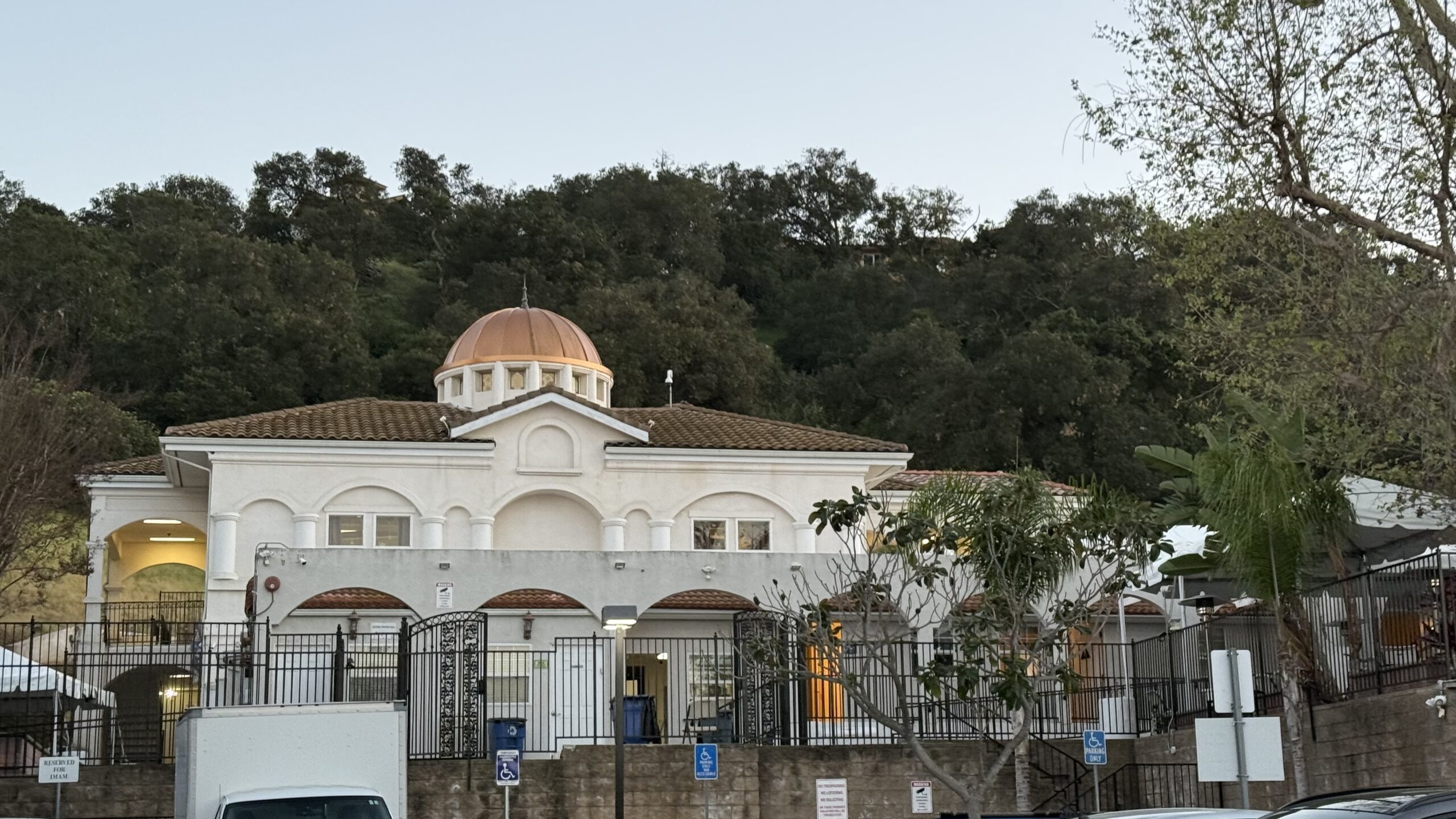
From the evening of Feb. 17 to March 19, Muslims around the world observed Ramadan. Widely regarded as the holiest month in Islam, Ramadan commemorates the revelation of the Quran, the central religious text of Islam. In this month of religious dedication, many Muslims fast from food and drink during sunlit hours and participate in intense prayer. Whether observing the holiday at the Islamic Center of Conejo Valley [ICCV] or privately with their families, many Muslim Thousand Oaks community members take part in Ramadan.
Ramadan is a holy month observed by Muslims worldwide where they focus on faith and community. During these 29 or 30 days, many Muslims fast from sunrise to sunset every day, so they do not eat or drink anything while the sun is up. After the sun sets, communities often come together to share a meal. Because the holiday follows the lunar calendar, the timing of Ramadan changes yearly and can take place anytime during the calendar year.
Fasting during this holy time is more than just going without food, it is a way for Muslims to strengthen their relationship with God and focus on themselves. Yasmeen Thabet, junior, observes Ramadan yearly and takes this time to step back from everyday distractions. “In this month, it’s really important to Muslims to focus on religion and not worry about worldly things,” Thabet said.
Throughout the month of Ramadan, one common tradition is Iftar dinners. Iftar is the meal eaten after sunset during Ramadan. Eid celebrates the end of Ramadan and is commonly celebrated with large dinners and gift-giving. Eiliyah Ahmed, senior, enjoys the connection that these traditions foster amongst her friends. “All of the kids are about my age, and we don’t really hang out outside of Ramadan and Eid. So that’s just one time we get to see each other and talk about how life’s been,” Ahmed said.
Fariha Anwar, junior at Santa Susanna School, is involved with the Female Muslim Student Association: a student-run organization made up of many ICCV members. Groups such as this are able to foster deeper connections amongst young, Muslim students. “I also enjoy connecting with other young girls at our mosque…we have our girls group for students, and I think that’s a good place where we connect with one another,” Anwar said.
Newbury Park resident Iman Iqbal leads the organization of the Eid picnics and carnivals at ICCV. “I grew up attending [ICCV] and now I have the opportunity to kind of give back to the community that helped raise me,” Iqbal said.
Iqbal is also active with the youth community at the mosque and volunteers as second grade teacher for the Islamic School program. “It’s very rewarding [teaching] here, because I see how impactful it is to the kids of that age,” Iqbal said. “I hope that I make an impact on their life […] whether it’s an Islamic teaching or just learning about being a good human being.”
For many Muslims, Ramadan is a month where they observe their faith more closely and turn to Islamic teachers such as Sajeda Adat, who provides theological guidance to many Muslims in Newbury Park. “I literally teach the Quran […] and I also teach a lot of Islamic law because I graduated from an Islamic seminary in the UK,” Adat said. “My role is a teacher, mentor, friend, and Islamic counselor. There’s a lot of hats that I wear.”
During Ramadan, Adat leads prayer groups for women that she hopes foster camaraderie and spiritual feelings in attendees. “Being a Muslim woman is the same as being a Muslim man […] but [this] is a great opportunity because we have women giving lectures and leading the prayer,” Adat said.
While practicing religion can bring a sense of peace or fulfillment to one’s life, there can also be challenges faced. Anwar recalls a moment where she was met with conflict after she chose to wear a head scarf. “One Ramadan, I thought I would try to experience wearing the hijab to see what that would be like. It was very difficult [and] I got lots of mean comments and not so nice looks at school,” Anwar said. “It felt rewarding in some ways [such as] spiritually, but it was difficult.”
Iqbal, who is a young mother, also notes potential concerns when raising Muslim children. “The real truth is that, like myself who has grown up in this country, I experienced Islamophobia and I know how it feels […] and now it’s only gotten more difficult,” Iqbal said. “I think it comes down to helping [my children] feel comfortable with their identity and raising kind people [who] treat people with respect above everything else.”
As tensions such as the U.S. conflict with Iran escalate, Adat reaffirms that wishes, or “duas” in Arabic, for global peace is a priority for local Muslims. “At the end of [prayer group] we do a prayer where we’ll pray for the whole world. It doesn’t matter where you’re living in the world, we’re making a dua,” Adat said. “For example, there’s wars going on right now so we’ll be making special prayers for that. We’re asking God to restore peace and stability all throughout the world, regardless of faith, religion, or color.”
Observing Ramadan does not come without its trials and tribulations, including challenging fasting and mournful, uncertain feelings regarding the U.S. conflict with Iran. However, Ramadan is important to the Islamic community as it recognizes the revelation of the Quran and marks a time of devoted spiritual connection. As Ramadan abides by the Islamic calendar, dates on the Gregorian calendar vary each year. In 2027, Ramadan will take place from Feb. 7 to March 8.


