Introduction
With the variety of courses of varying difficulty that Newbury Park High School [NPHS] offers, students have the liberty to choose classes that align with their schedule and goals. For some students, registration may go smoothly. However, for many others, registration can be complicated due to factors such as impact on grade point average [GPA], amount of homework and type of course credit.
For the upcoming school year, Newbury Park High School will continue to offer College Preparatory [CP] classes, Advanced Placement [AP] classes and International Baccalaureate [IB] courses. Students can also choose to take Dual Enrollment classes through Moorpark College.
Both AP and IB are rigorous programs that allow students to earn college credit, but the two are centered around different educational philosophies, with IB focusing more on global perspectives and holistic learning. Furthermore, students who pursue an IB diploma may earn credit at international universities, an option that is less common with the AP program.
Course pathway options
Between February and March of this year, NPHS course registration was in full swing. Before students made their way to their assigned counselor’s offices, they scanned the list of classes available to them to piece together their schedule for the next year. For some students, course registration also meant filling out dual enrollment forms. Richard Napora, NPHS counselor for students with last names San-Z, offers individualized guidance to students navigating course registration. “The hardest thing is if a student doesn’t actually know what they want. So if a kid comes in and asks me, should I take IB or AP, or should I take community college class? My first question to them typically is, what is your intent? You know, your intended goal,” Napora said.
Napora feels that although students may receive contrasting advice from different sources, with many being told to take certain classes over others, it is best to take advantage of the classes NPHS offers. “If you want to keep all your options open, then I would take the coursework that we offer at Newbury Park and max out in rigor, as best you can reasonably, without having a mental breakdown. And then what I would be shooting for at Moorpark or wherever, is coursework we don’t offer here,” Napora said.
Edith Cortes, NPHS counselor for students with last names starting with Moo-Sam, as well as English learners, agrees with Napora in that dual enrollment is a great supplemental opportunity for students. Cortes addresses a common sentiment regarding dual enrollment, specifically that it frees space in one’s schedule during the school year. “I definitely don’t support students avoiding courses here, trying to get that free period by trying to do dual enrollment. I think that’s like a pretty standard thing in our department administration as well,” Cortes said.
Napora explains one priority for students and families regarding courses. “Societally, what happens is a lot of parents might force the kid [to take a difficult class] and then if they end up getting a B in that class, the parent will make the kid level into CP. I think that relates back to the instant gratification kind of society. I always encourage the kids to try and stay [in the class]. But sometimes they [want to] preserve their GPA, not understanding that GPA, in and of itself, isn’t going to be the sole determinant of whether or not you get into most colleges,” Napora said.

Student perspective
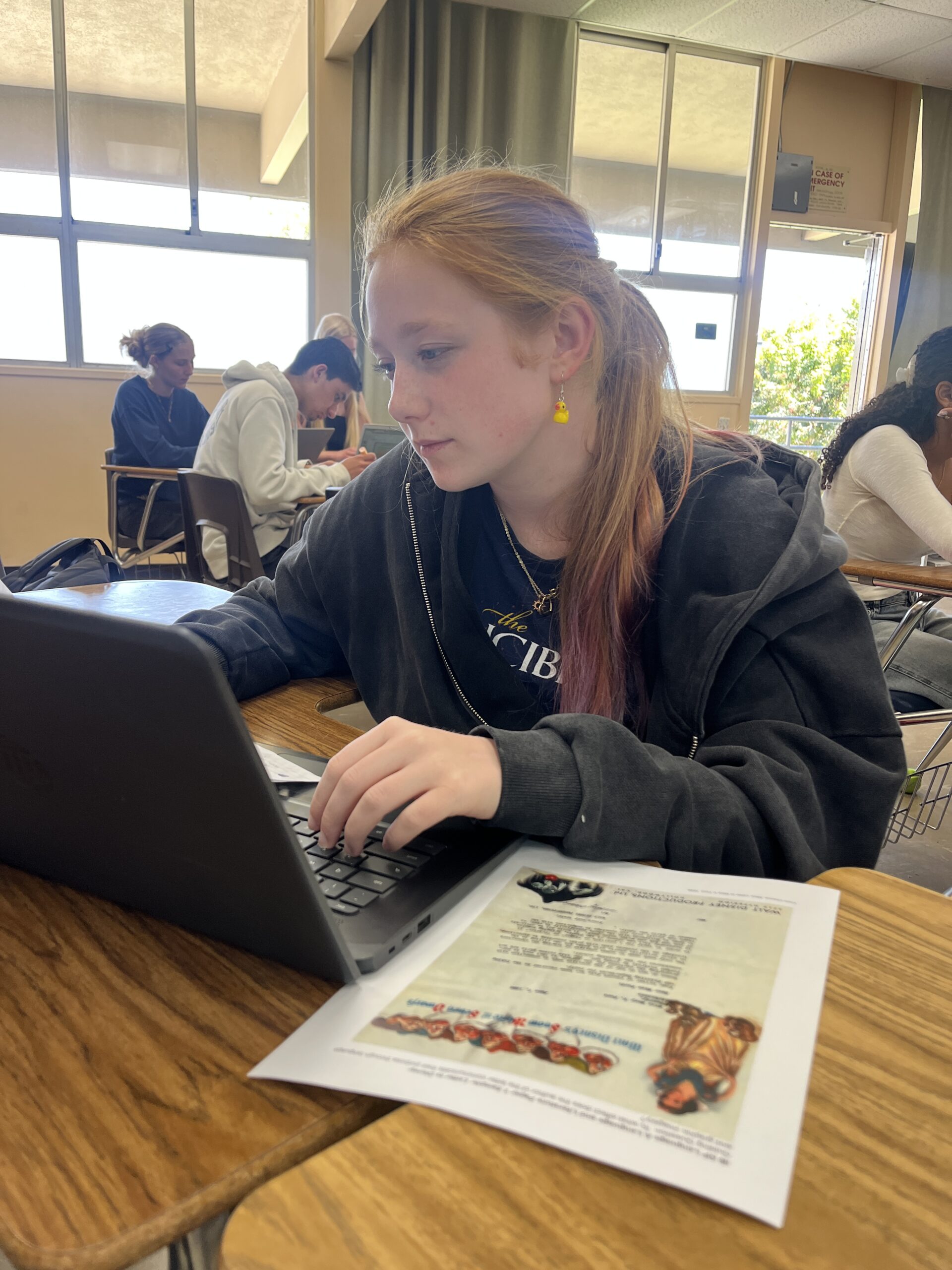
Julianna Bohl, junior, is currently enrolled in English 11 CP. Though Bohl originally began high school on the honors English pathway, she notes that a variety of factors played a role in her decision to take English 11 CP. Mainly, Bohl did not want to commit to the intensive two-year course. “I did really well in 10th grade English, and […] I did sign up for IB English,” Bohl said. “But in the beginning of the year, I dropped it, because of the length of the class and the scheduling.”
Bohl notes that she particularly found it difficult to rationalize the large course load for the class. “There was too much homework, and I [didn’t] really have time for that this year,” Bohl said. Bohl believes that alternate English course offerings would be beneficial to juniors such as herself. “I would have taken honors or [Advanced Placement] English if we had it, but we don’t.”
The issues that Bohl faces have led to her decision to advance into English classes offered via dual enrollment. “Unfortunately, I also don’t really love the CP [classes]. My teacher is good but it’s just a different environment [because] not everyone is totally committed to [academics].” Bohl also notes that taking English via dual enrollment will give her more benefits in terms of college credit. “Dual Enrollment [classes] are already a college course, so it’s accepted as a basic English credit. With IB, you have to take the test, and even then, some schools don’t accept IB credit,” Bohl said. “Then you have to write the [Higher Level Essay], so that’s something everybody’s stressing about.”
Resources
As students navigate their course selection, as well as college applications, one valuable resource is the College and Career Center on NPHS’s campus. As the College and Career Guidance Specialist, Amanda Renaud has worked with all different types of students and helped them decide which academic path they want to pursue. “My biggest piece of advice would be asking the student what exactly their goal is in choosing the class. For some students, the goal of having college credit by the time they graduate high school is really important. And if their goal is to have college credit before they graduate high school, a college class is the best way to guarantee that they’re going to get that college credit,” Renaud said.
Renaud sees the value of dual enrollment courses, mainly because they offer guaranteed college credit. They are also free for students to enroll in during high school, although some courses have extraneous fees. Renaud also believes that it is valuable for college admissions. “It communicates that you’re prepared, you’re mature and you’re ready to take on that college class at their institution as well. So I do think it is valued,” Renaud said.
Renaud also sees lots of value in AP and IB courses, aside from the concern of college credit. Both are rigorous types of courses, and Renaud thinks that the skills students gain from these classes are helpful beyond high school. “If you’re wanting to take an IB class for the experience of it, for the pursuit of knowledge and for the intellectual stimulation, then that’s a great opportunity to take an AP or an IB class. You get to know a community of other IB and AP students, and that can be a really great goal as well,” Renaud said.

Conclusion
Ultimately, all levels of classes that Newbury Park High School offers have their own benefits and drawbacks. On campus, there will continue to be discussions about the different pathway options. If students have questions or concerns about choosing courses, they can communicate with their counselors and utilize the College and Career Center. “We always invite students to use the platforms that are readily available, to tap into the College and Career Center resources that we have, but also to come and see us proactively,” Cortes said.