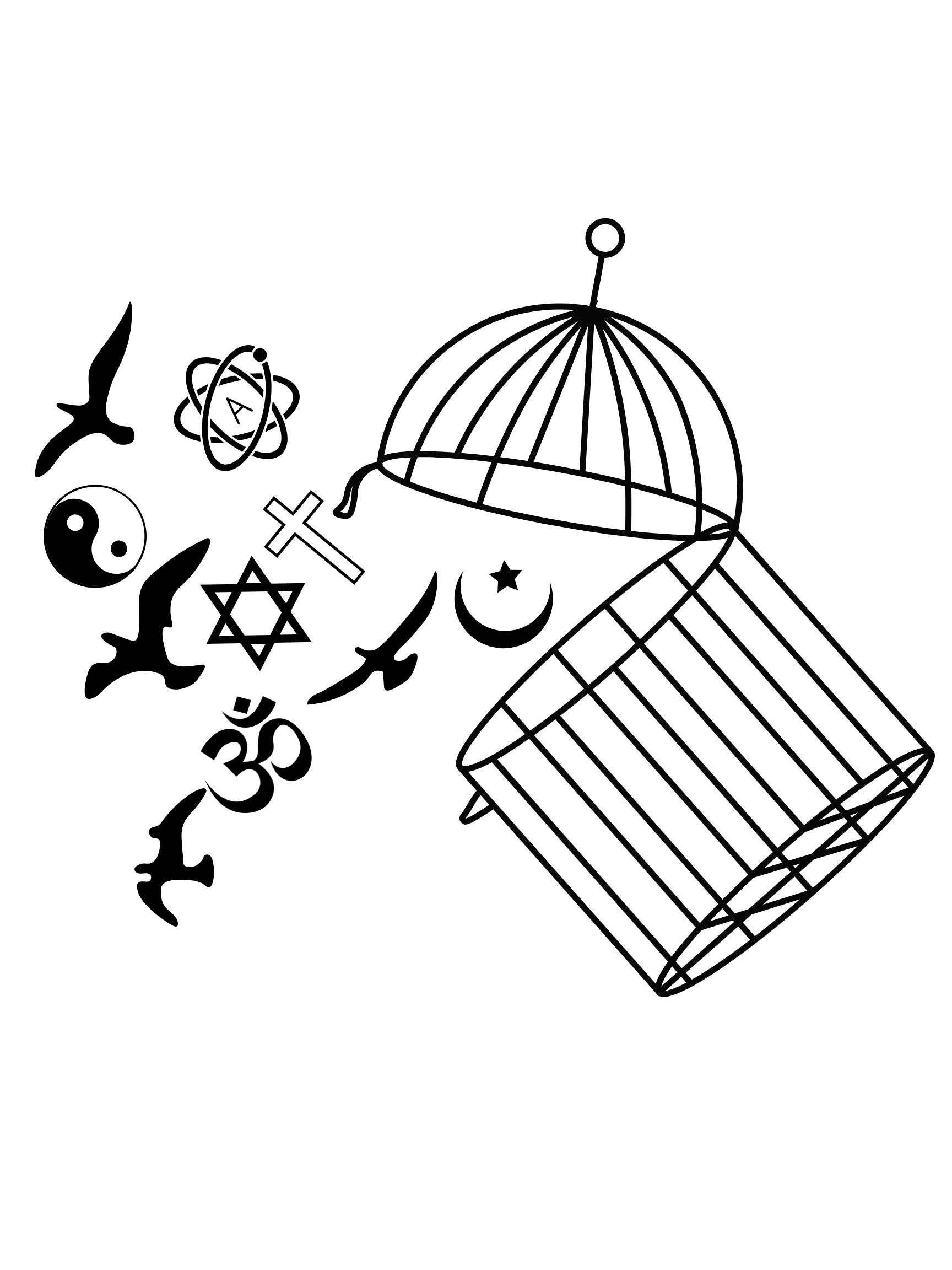
Feb. 28 marked the start of the international conflict with Iran, when the U.S., with assistance from Israel, bombed Iran with the stated goal of eliminating its nuclear capabilities. Many supporters of the conflict hope U.S. intervention brings an end to Iran’s authoritarian regime, characterized by heavily restricted freedoms, especially for women and minorities. Though justified in religion, the totalitarian reign over Iran is not a matter of Islam, but of dangerous religious nationalism being abused to maintain strict policies and conformity. Religious nationalism, the philosophy of religious beliefs and identities used to justify governmental and nationalistic actions and attitudes, is dangerous. Whether it be the Church of England in the 1700s, today’s Islamic Republic, or Christianity’s growing influence on U.S. law, religious nationalism is unjust, limiting freedoms and promoting oppression and violence.
Following the Iranian Revolution in 1979, religious authority became a mainstay in the Iranian government, allowing leaders to justify tyrannical laws and actions “in the name of Islam.” The institution of the Islamic Revolutionary Guard Corps forces a culture of mandatory dress codes, censors and limits speech, and suppresses protests for rights within the country, particularly feminism. However, the problem does not lie within the religion of Islam itself. Within the U.S. government, Christian nationalism is starting to take effect on the federal legislature. This can be evidently seen through the limiting and outlawing of reproductive rights, the pushing of Christian beliefs in public schools and the increasingly weakened separation between church and state that should serve as an unbreakable boundary for the stability of the nation.
After protests in major cities of Iran, such as Tehran, the Iranian armed forces were employed to restore order by increasing their numbers. However, some feel that this act amounts to an infringement on human rights. With the active military, there have been reports of increased surveillance and reduced communication with outsiders.
Women’s rights and freedoms are severely restricted by Iranian law. Justified in tradition, child marriage persists, with the legal minimum age for a girl to marry being 13-years-old. All women are required by law to wear a hijab and cover their hair. Many women wear burkas, abayas, long cloaks, niqabs and face veils that cover everything but the eyes. Failing to do so may result in fines, surveillance, imprisonment or even physical punishment.
The ideal of “separation of church and state” was coined by Thomas Jefferson and inspired American governance and the First Amendment of the U.S. Constitution. However, the prevalence of Christianity in America has always been and continues to be integrated in the U.S. government.
From swearing of “under God” in the Pledge of Allegiance to the national motto, “in God we trust,” it is hard to argue that Christian nationalism does not influence U.S. governance. Further, many politicians use the Christian faith to promote and justify restricting policies, such as restrictions in abortion access, women’s rights and LGBTQ rights. Limits and bans on abortion are heavily influenced by the religious belief that life begins at conception; arguments against transgender healthcare and same-sex marriage stem from Christian theology about gender and marriage. However, religion has no place within the government because not only does it directly contradict the basis of American values, but religious nationalism of any kind is inequitable.
Throughout history, religion has been a tool to justify systems that limit freedoms and silence opposition. When religion becomes enmeshed with government power, disagreement evolves from political opposition to religious deviance. This creates an environment where discrimination, censorship and violence can be justified under religion.
Religion itself is not inherently oppressive. People should not be condemned for their beliefs, just as others should not be punished for failing to adhere to religious norms. Faith can provide guidance, identity and community for billions of people worldwide. The Islamic Republic of Iran should not define Islam any more than repressive Christian nationalism should define Christianity. In both cases, religion is weaponized as a political tool to oppress diverse populations of different beliefs by holding them to the standards of a single interpretation of one doctrine. History demonstrates that when church and state become inseparable, the freedom of the people will erode.