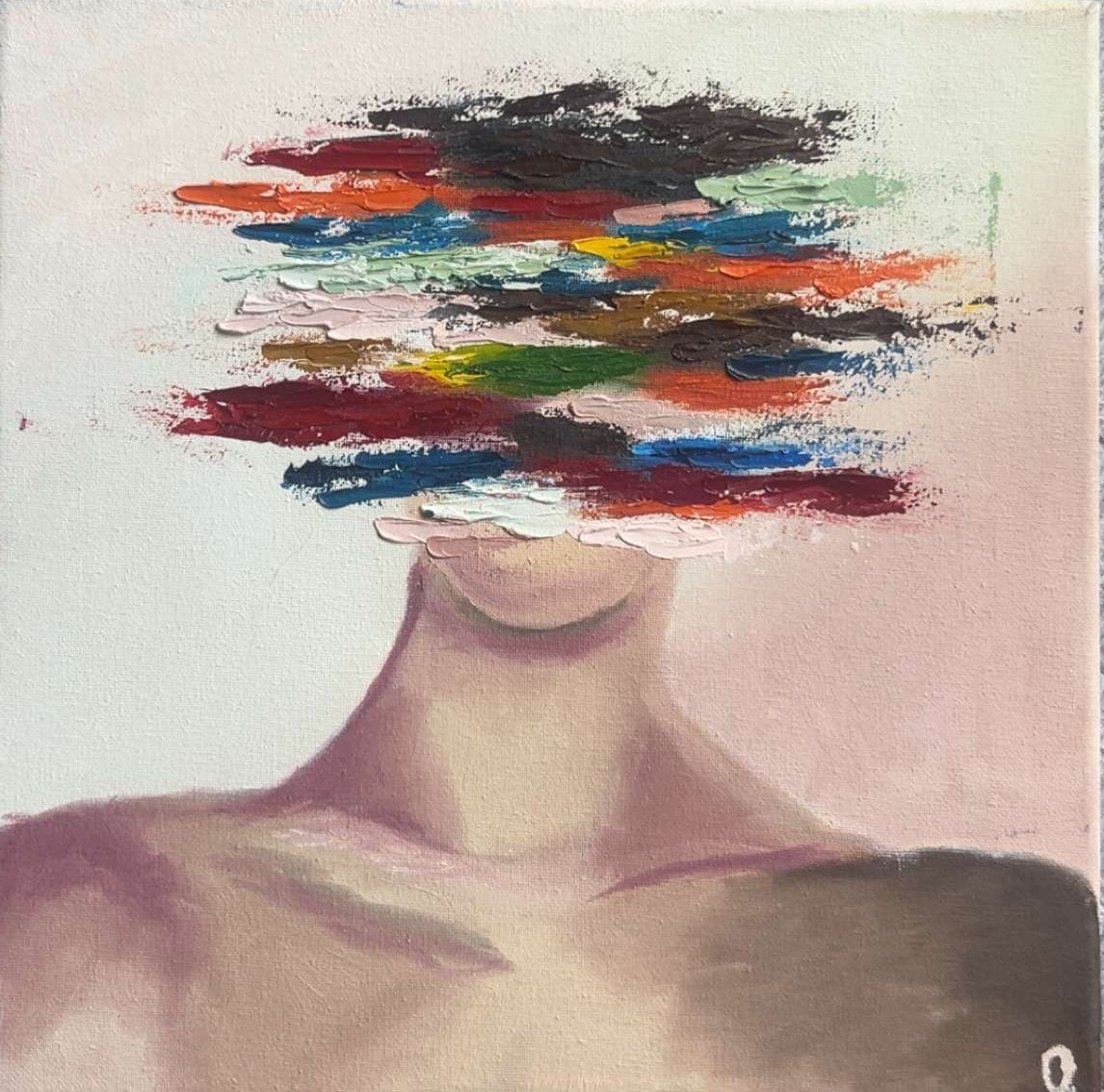
If OpenAI had existed when Leonardo De Vinci or Vincent Van Gogh were alive, would the Mona Lisa or the Starry Night have ever been created? If Pablo Picasso asked ChatGPT to paint him, how would the culture of creative, abstract, emotional expression have developed? Artificial intelligence [AI]’s rapid developments in creative spaces prompt debates regarding AI’s place in creative environments and philosophical questions about what makes art, art.
Local artists and art enthusiasts expressed their passion for hands-on creative expression. Students involved in painting, drawing, sewing, pottery and film shared their experiences as artists in the modern age of AI.
Jennifer Lee, International Baccalaureate [IB] art teacher, assigns worksheets where students document their progress on art pieces, displaying the creative process and proving that the art is human-made.
“If you have AI [create], it looks cool, but it doesn’t have the same effect that true artwork does,” Lee said.
Artistic abilities stretch beyond the canvas. As a filmmaker, Zoe Maturo, senior, bears many responsibilities, which include writing, directing and editing. Through creating films, she has realized the intrinsic relationship between the creator and audience, even if it’s not intentional.
“Any movie that you watch, any song that you listen to, any poem that you are forced to read in English class[…], it’s all subjective.[..] So it’s paradoxical, art is so personal to the person that created it yet so connective to every single person around them,” Maturo said.
She shares her views on AI in creative spaces and how human experience is imperative in the making of art.
“I feel like it’s kind of the opposite of what making art inherently is because, whether [its] cave paintings on a wall [or] giant, multi-million budget feature films or the Mona Lisa, there’s a hard work put into it. I mean cave painters had to grind the pigment themselves. Just [to] have put a hand print on a wall that is still here today and that people are still discovering and still connecting with. And that goes for all art, I think,” Maturo said.
Artist 1:
When she’s not focusing behind the camera for her photography internship, Olivia Cox, sophomore, can be found indulging in her paintings, behind a large easel, with her cats cuddled up beside her.
“I feel like art is such a great way to show [how] you feel and express emotion and feeling, whether it be happy or pain, or sadness. I feel like that’s why art is so influential and important, it is so individual, and the process is so rewarding,” Cox said.
Cox delves into her concern for AI steals content and concepts from hard-working artists.
“The original artist can begin to lose their financial support and creative liberties,” Cox said.
Artist 2:
Zoie Nawrocki, sophomore, spends her weekends exploring her creativity and emotional expression on the wheel at Thousand Oaks Pottery Studio.
“I think that something that makes art so human when it’s handmade [is that] the mistakes and the little discrepancies in it can show emotion more than the entire medium itself does,” Nawrocki said.
At the studio, Nawrocki has formed bonds with her instructors and with all kinds of other young artists. Nawrocki rebuts the pro-AI argument that it makes art more accessible to differently abled creatives.
“There are so many people in the world with physical and developmental disabilities who still make art. In fact, I think there are three or four [disabled] people in my pottery class […], and they still make art, and they still put their souls into it. It’s so important,” Nawrocki said.
Artist 3:
Brenna Bauwens, junior, enjoys creating art through a plethora of mediums, like oil pastel, acrylic paint and pottery. Her view of art is defined by hard work and human experience.
“You put time into [it] and effort, you get your hands dirty [and] you put love into it. You [also] put a story into art. Like, why did you create this? How did you create it, and how long did it take you? I think that’s how art should really be portrayed,” Bauwens said.
In addition, Bauwens expands on the importance of the creative process and the role of trial and error.
“You learn and through the process, you figure out what you like the most and what you don’t like, you can avoid different art themes. If you don’t like painting, you can go into drawing or sketching, but there’s a wide variety,” Bauwens said.
Artist 4:
As a multimedia artist, Kaylin Tran, senior, has been captivated by art ever since she was a child. Since the rise of AI, she has been influenced to make her pieces as true to her as possible.
“I’ve always tried to approach my work with as much authenticity and emotion as I can. […] Relying entirely on computer software to completely take over and create art for you just destroys all the humanity and fun in art that has been practiced forever,” Tran said.
With AI-generated art pieces taking the world by storm, Tran feels that it could take jobs from many artists and create an environment with no emotion surrounding art.
“There is a difference between having a computer do it and using your God-given hands. […] We lose the awe factor in wondering how artists could have done what they did, and the emotion in art is gone,” Tran said.
Artist 5:
Genevieve MacKay, senior, has been doing photography seriously since her freshman year, but has had the hobby since she was little. Though there can be varying opinions on whether there is any type of emotion in AI photos, the fact is that a photo taken by a person gives it originality.
“Emotion is the main component that separates human art from AI-generated work. Human art relies heavily upon emotion. With emotion, art wouldn’t be a popular subject, wouldn’t inspire so many,” MacKay said.
Being able to take inspiration from previous photographers is the joy of the 200-year-old craft, and with AI, it only sees itself as the creator with no other sense of authenticity.
“Traditional artists credit the work they pull from, AI claims all of its art as its own, which makes it a problem, as then people decide that an AI-generated version of someone’s art is cheaper and faster,” MacKay said.
Artist 6:
For Jasmine Smith, junior, the fabric aisles at Michaels are her favorite clothing store. Sewing custom outfits and crafting original poems, Smith rejects the growing captivation AI has on her peers.
“I think it really harms the future of society and the future of the world. We know [AI is] limiting our intellectual abilities,” Smith said.
After hours behind the sewing machine, stitching love into gifts for her friends and embroidering passion into new outfits, Smith reflects on the rewarding feeling she gets from coming up with new ideas without AI.
“Anything that AI can generate, you can make; you can make better. You can make it more ethically, and you can make it a lot more suited for you. In many ways, fast fashion is the same idea as AI. You can easily get slop, or you can make something special,” Smith said.